



Smart Infrastructure, Green Spaces Advance Urban Transformation Across Makkah and Holy Sites
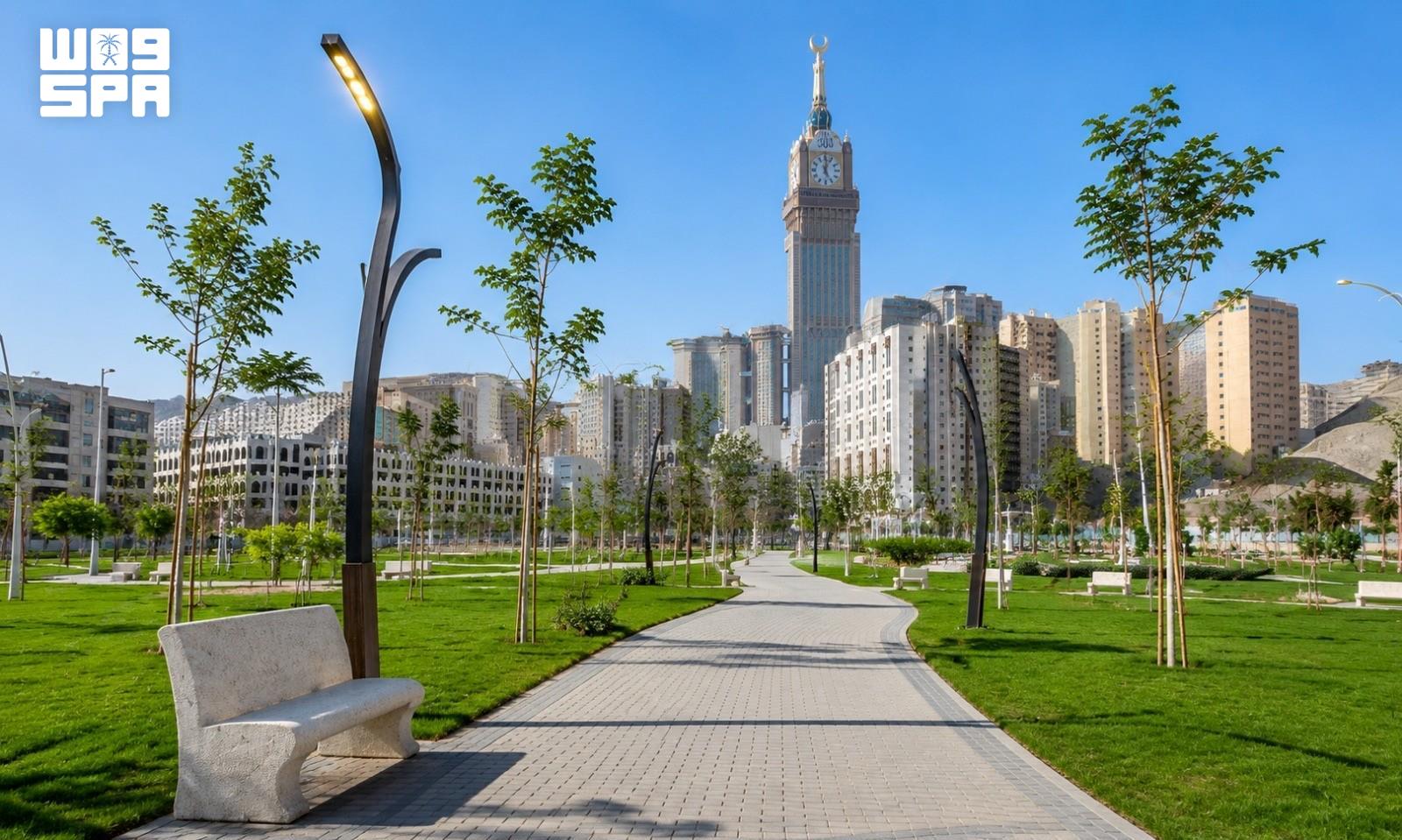
Makkah, November 06, 2026, SPA -- Makkah represents a distinctive model for the evolution of historic cities of global religious and humanitarian importance. The holy city is undergoing an extensive urban transformation designed to enhance the quality of life, upgrade infrastructure, and optimize public service delivery—all while safeguarding its historic identity and spiritual stature in alignment with Saudi Vision 2030 objectives.
This ongoing transformation encompasses road and transport expansions, urban landscape enhancements, green space creation, and the integration of smart technologies into municipal governance. Shaped by complex mountainous terrain and massive visitor influxes during Hajj, Umrah, and Ramadan, urban planning in Makkah addresses physical growth alongside crowd management, mobility, safety, and operational resilience.
In this context, the Royal Commission for Makkah City and Holy Sites establishes strategic priorities and aligns development programs, ensuring that spatial planning supports sustainable economic and social advancement. Concurrently, the Holy Makkah Municipality executes beautification initiatives, road and sidewalk upgrades, public facility expansions, and municipal cleanliness operations.
Municipal data highlights the scale of the transportation network, which comprises 8,041,454 linear meters of roadways in Makkah and 595,411 linear meters within the holy sites. The lighting network encompasses 145,000 poles and towers in Makkah alongside 5,000 units throughout the holy sites, ensuring around-the-clock visibility and public safety.
The transit network features 211 bridges across Makkah, 62 vehicular and pedestrian tunnels, and 20 dedicated pedestrian footbridges. These elements maintain vital connectivity across neighborhoods and ensure fluid movement during peak pilgrimage seasons.
To enhance environmental health and community recreation, Makkah hosts 294 public parks, plazas, and playgrounds spanning 2,039,993 square meters. Expanding these green spaces and afforestation initiatives remains a central priority under the Quality of Life Program, moderating the local climate and creating accessible venues for physical and social activities.
Technological advancement forms another core pillar of Makkah's development. The integration of artificial intelligence, data analytics, and Internet of Things (IoT) platforms supports traffic management, accelerates municipal emergency response times, and optimizes resource allocation as the city advances toward a smart city model.
Crucially, modern development remains integrated with the conservation of cultural and historical heritage. Safeguarding historical landmarks, traditional markets, and sites tied to the Prophetic biography preserves the authentic identity of Makkah while surrounding infrastructure evolves, reinforcing the holy city's enduring stature as a global religious, cultural, and sustainable urban model.
-- SPA
