



Diplomacy on a cautious track
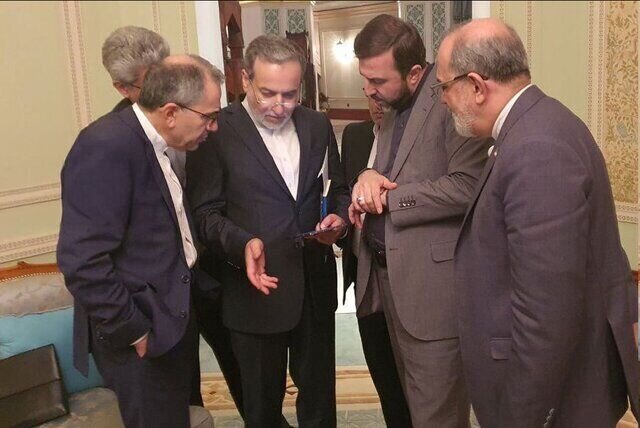
TEHRAN, Feb. 17 (MNA) – The second round of Iran-US negotiations, more than merely a technical meeting, is a political test to measure Washington’s willingness to move toward a balanced and sustainable agreement.
On the eve of the second round of indirect negotiations between Iran and the United States, the political and media atmosphere surrounding these talks remains marked by caution, skepticism, and, at the same time, realism. Tehran emphasizes that entering this process is not driven by optimism, but by a precise calculation aimed at safeguarding nuclear rights and seeking sanctions relief; a path which, according to Iranian officials, is defined strictly within the nuclear framework and does not encompass any other agenda.
Iran’s return to the diplomatic track came following intensive consultations by several regional countries with the President. These countries, stressing the necessity of managing differences through dialogue, warned about the consequences of escalating tensions and underscored the active role of diplomacy in preserving regional stability.
In this context, the role of countries such as Oman in facilitating indirect communications between Tehran and Washington is recognized; a country that in past years also provided the groundwork for confidential talks at sensitive junctures. It appears that at the current stage, Tehran evaluates regional mediation as more realistic and less costly than extra-regional mechanisms.
Clear Red Lines; Negotiations Strictly Nuclear
According to informed sources, Iran entered the new process only after receiving a message from the American side that the negotiation agenda would be limited to the nuclear file.
Tehran has set two specific conditions for participating in the talks: acceptance of the principle of enrichment and exclusive focus on the nuclear issue.
Iranian authorities have stated that raising regional or missile issues within this framework would mean a departure from the initial understanding and suspension of the diplomatic process. From Tehran’s perspective, the objective of the negotiations is clear: preserving nuclear rights alongside lifting unjust sanctions and achieving tangible gains for the country.
Public Distrust: A Determining Variable
One of the significant variables in the new equation is the high level of public distrust in Iran toward the United States. According to the results of a survey conducted by the GAMAAN institute in September 2025, approximately 75 to 80 percent of Iranian respondents considered the United States an untrustworthy party, and only a minority supported direct negotiations with Washington.
This view is rooted in historical experiences and developments of recent years. The United States, at various junctures, relying on informal networks, incitement of violence, and exploitation of genuine social grievances, has attempted to divert protest movements from economic demands toward security confrontation; experiences that date back to the 1953 Iranian coup d'état and have consistently been employed as a last resort by the United States at different periods.
This American approach has directly influenced Iran’s assessment of Washington’s intentions on the diplomatic path. Therefore, all these events have played a role in shaping this perception; hence, the negotiating team is compelled to manage not only the external challenge but also domestic sensitivities.
Washington: Contradictory Conduct and a Test of Seriousness
Iranian officials consider the contradictory behavior and statements of American officials to be one of the main obstacles to forming a sustainable process. Shifts in positions over short intervals, lack of coherence in official messages, and the prolonged gaps between meetings are among the issues that Tehran evaluates as signs of an unprofessional and unserious approach.
Iran continues to regard negotiations as the primary tool for managing tensions and advancing its national interests, yet there is also the assumption that certain war-seeking currents in the United States and circles close to the Israeli regime may attempt to obstruct the negotiation process and block the path of diplomacy. For this reason, while declaring full seriousness, Tehran has emphasized that negotiations must proceed without threats and pressure.
Europe’s Marginalization in the New Process
While Germany, the United Kingdom, and France were central signatories of the previous nuclear agreement, in recent weeks, they have not established direct contact with senior Iranian officials.
From the perspective of some analysts in Tehran, this situation signifies a reduction of Europe’s practical role in the current equation, to the extent that Iran views these three countries more as obstacles in the diplomatic process than as effective mediators; a development that has led Tehran to focus more than before on regional channels.
Diplomacy as a Strategic Choice
The Islamic Republic of Iran has stated that it prefers diplomacy to war, but this preference does not mean retreat from red lines. The negotiating team emphasizes “result-orientation” and believes that any potential agreement must, in the shortest possible time, lead to tangible achievements for the Iranian nation.
It appears that the second round of negotiations, more than merely a technical meeting, is a political test to measure Washington’s willingness to move toward a balanced and sustainable agreement. Despite accumulated doubts, Tehran still considers dialogue the tool for managing tensions, but this time with heightened caution and emphasis on past experiences.
