



Newspapers Highlight Preliminary Election Results: UN Praise, Security Success, and Constitutional Preparations for the New Parliament’s First Session
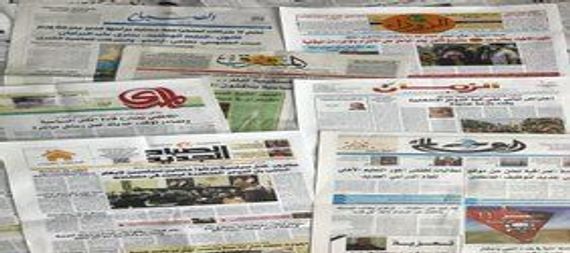
Baghdad / NINA /- The newspapers issued in Baghdad today, Thursday, November 13, focused on the announcement of the preliminary results of the sixth parliamentary elections and the expected date for the first session of the new Council of Representatives.
The papers highlighted the victory of Prime Minister Mohammed Shia Al-Sudani’s coalition, Reconstruction and Development, which secured first place, followed by Mohammed Al-Halbousi’s Taqaddum (Progress) Party, and Nouri Al-Maliki’s State of Law Coalition. They also published detailed tables showing the number of voters and votes obtained by political parties, alliances, and coalitions across Iraq’s provinces.
The newspapers also cited the Independent High Electoral Commission’s confirmation that the manual and electronic counting results were 100% identical. Meanwhile, the United Nations praised the conduct of the elections, describing them as “calm and orderly,” with voter turnout exceeding 56%. The UN reaffirmed its commitment to supporting Iraq in strengthening its democratic achievements and advancing peace, stability, and development.
Al-Sabah newspaper, issued by the Iraqi Media Network, focused on the expected date of the first session of the new parliament. It quoted Dr. Miri Kazem, Chairman of the Committee of Law Deans in Iraq, Dean of the College of Law at the University of Babylon, as saying that the newly elected Council of Representatives “cannot convene before January 9, 2026, which is the date marking the end of the current parliamentary term, even if all legal and constitutional procedures are completed.”
Kazem explained that the elections were conducted under clear legal mechanisms stipulated in the Law of the Independent High Electoral Commission of 2019, particularly Article (20), which grants political parties and candidates the right to appeal the decisions of the Board of Commissioners within three days from the date of publication, either through national or local election offices, or directly before the Electoral Judiciary Authority.
He elaborated that “when the Commission announces the preliminary election results, they are issued by a formal decision from the Board of Commissioners. Political entities or candidates have the right to file appeals within three days from the day following publication. The Board of Commissioners then prepares its responses to these appeals for submission to the Electoral Judiciary within no more than seven days from the date of receipt.”
Kazem added, “The Judicial Authority must decide on the appeals within a maximum of ten working days from the date it receives the Commission’s responses, and it is required to issue a ruling within this period.”
He concluded by emphasizing that “the new parliament cannot, under any circumstances, hold its first session before the conclusion of the current parliamentary term, which ends on January 9, 2026. The first session will therefore take place only after this date. Moreover, the presidential decree calling for the parliament to convene will be issued only after the Federal Supreme Court ratifies the final results—an institution that is not bound by a specific timeframe to do so.”
Meanwhile, Al-Zawraa newspaper, issued by the Iraqi Journalists Syndicate, followed up on the issue of election-related complaints.
The paper, citing the Independent High Electoral Commission, reported that the total number of complaints filed during both the special and general voting processes reached 48. It also noted that in the event a candidate is disqualified, their votes are annulled for both the individual and their party.
Commission Board Member, representative to the Higher Security Committee for Elections, Abbas Al-Fatlawi, stated that “after the smooth and successful conduct of the electoral process, the Commission is bound by the legal timelines regarding all procedures, including the announcement of results.”
The newspaper also quoted IHEC spokesperson Jumana Al-Ghalai as saying that the number of complaints received so far reached 39 concerning the special voting and 9 related to the general voting.
Additionally, Al-Zawraa highlighted the success of the national security plan implemented during the elections. It quoted Lieutenant General Qais Al-Muhammadawi, Deputy Commander of Joint Operations, head of the Special Security Committee for the Elections, as saying during a press conference that “the election security plan was executed without the imposition of any curfew, ensuring full freedom of movement for citizens across Iraq.” He added that “the plan was characterized by a high level of detailed coordination with the Independent High Electoral Commission.”
Al-Muhammadawi further noted that “the committee, with all its members and provincial branches, built on the lessons of previous elections and began preparations as early as last June, ensuring that all security forces operated as one integrated team.”
Meanwhile, Al-Zaman newspaper reported that the review process of the vote-counting results caused a delay in announcing the preliminary election results, which the Independent High Electoral Commission had initially planned to release at 6:00 p.m. on Wednesday.
According to Al-Zaman, the IHEC announced the lists of winning blocs and parties about two hours later, confirming a voter turnout of around 56%, with more than 12 million Iraqis participating in both the general and special voting.
The paper also noted that IHEC confirmed receiving 99.7% of the results from polling stations in the general election.
In a detailed statement, the Commission clarified that 10,898,000 voters participated in the general voting out of 20 million eligible voters, representing a turnout of over 54%. It added that the special voting, held on November 9, saw participation by over 1 million voters out of 1.313 million registered, with a turnout rate of 82.5%.
The statement further indicated that 20,527 internally displaced persons cast their votes out of 26,538 registered voters, marking a participation rate of 77% across all IDP polling stations./ End
