



Singapore, Malaysia To Align Economic Interests Through JS-SEZ, RTS Link
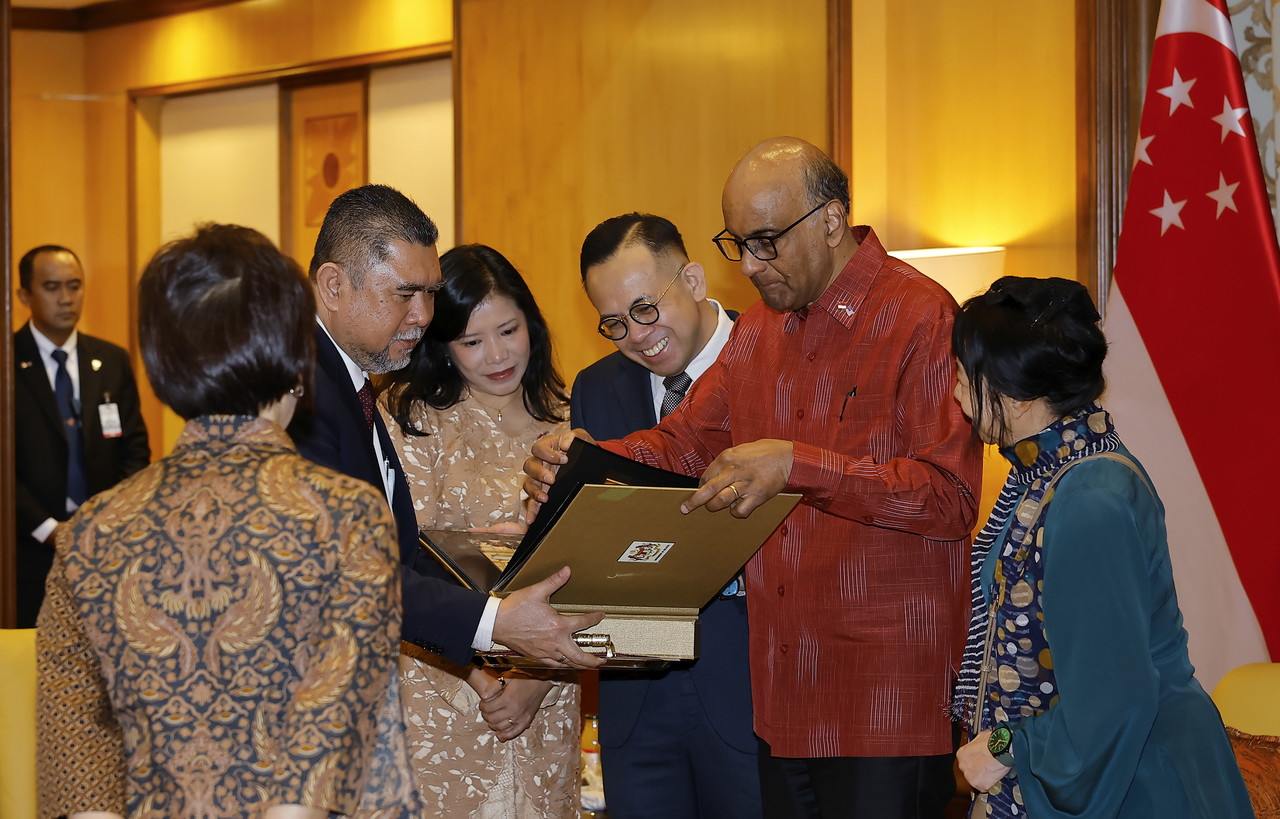
SINGAPORE, July 16 (Bernama) -- The Johor-Singapore Special Economic Zone (JS-SEZ) and the upcoming Johor Bahru-Singapore Rapid Transit System (RTS) Link will further strengthen economic complementarity between Singapore and Malaysia, President Tharman Shanmugaratnam said.
Speaking to Singapore media in Kuala Lumpur at the conclusion of his state visit to Malaysia from July 12 to 15, Tharman said Singapore and Malaysia were building a more mature economic partnership that would benefit both countries.
"It is no secret that, in linking up more with Johor, for instance, through the JS-SEZ and the RTS Link, there will be some businesses in Singapore who lose out. Some service industries will lose out.
"But others will gain, and on the whole, both countries will be winners. We have to accept that, with the larger win, there will be some losses. And that is a mature way of thinking about the bilateral relationship, on both sides," he said. His transcript was made available on the President's Office website.
The JS-SEZ aims to enhance cross-border connectivity, strengthen business ecosystems, attract high-value industries and talent, and reinforce the region's position as a leading investment and economic hub.
RTS Link connecting Johor Bahru and Singapore is set to enhance connectivity between Malaysia and Singapore. It is expected to begin operations in January 2027.
Tharman said Singapore and Malaysia also share a common commitment to open trade and investment, while seeking to diversify their trading links in the face of growing geopolitical fragmentation.
"In a world that is becoming more divided, we are also very keen to diversify our trading links, individually and as a region, and to avoid at all costs being forced by geopolitics into either a US-led bloc or a China-led bloc.
"We have to engage with each of the major powers, and grow our links with other regions of the world. Malaysia's and Singapore's thinking is very much alike in that regard," he said.
On maritime issues, Tharman said Singapore and Malaysia shared the view that all parties should abide by the United Nations Convention on the Law of the Sea (UNCLOS), which guarantees the right of safe transit through straits used for international navigation.
"We are also keen to promote the way in which the Strait of Malacca and Singapore are managed cooperatively by the three littoral states, Indonesia, Malaysia, and Singapore, and how we work together with user states as well as the industry not by charging tolls or fees, but through voluntary contributions to support the safety of navigation and environmental protection.
“It has worked well and is example of how littoral states can manage international waterways in ways that are win-win for all users and, importantly, abide by the law of the sea. We have very similar thinking on that,” he said.
Tharman said Singapore and Malaysia share a common strategic outlook on ASEAN, and expressed belief that the regional bloc has significant untapped economic potential.
"ASEAN has the potential to unleash a lot more economic value. We are not there yet, but we have significant potential in ASEAN," he said.
Tharman said Malaysia is keen to work closely with Singapore on regional initiatives as the city-state assumes the chairmanship of ASEAN next year.
-- BERNAMA
