



Interior Minister visits Syria, holds high-level talks and signs cooperation agreement
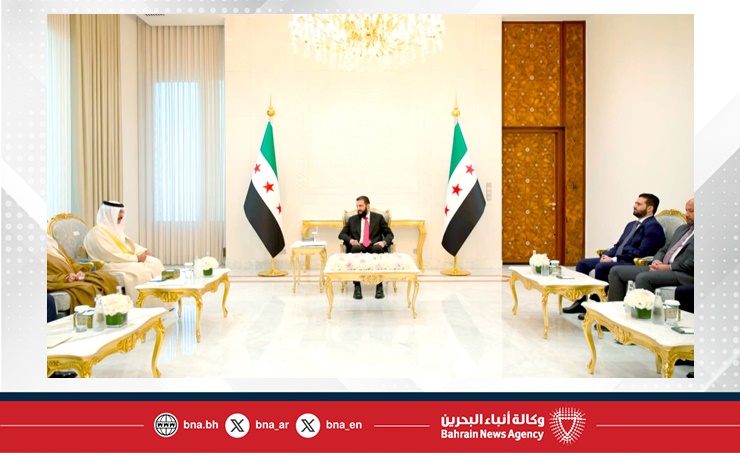
Damascus, Jul. 21 (BNA): General Shaikh Rashid bin Abdullah Al Khalifa, Minister of Interior, met with His Excellency Ahmed Al Sharaa, President of the Syrian Arab Republic, during an official visit to Syria.
General Shaikh Rashid bin Abdullah conveyed a message from His Majesty King Hamad bin Isa Al Khalifa, along with the greetings of His Majesty the King and His Royal Highness Prince Salman bin Hamad Al Khalifa, the Crown Prince and Prime Minister. He also conveyed their wishes for HE President Al Sharaa's good health and for continued security and stability for Syria and its people.
HE President Al Sharaa conveyed his greetings to His Majesty the King and HRH the Crown Prince and Prime Minister, wishing Bahrain and its people continued stability, progress and prosperity.
During the visit, the Interior Minister also met with Anas Khattab, Minister of Interior of the Syrian Arab Republic. The two sides held talks on enhancing bilateral cooperation and coordination, during which the minister emphasised Bahrain's steadfast support for Syria, its leadership and people, and commended the efficiency and capabilities of the Syrian security services and their role in enhancing the country's security and stability.
General Shaikh Rashid bin Abdullah highlighted the longstanding relations between Bahrain and Syria and the shared commitment to strengthening relations based on mutual respect and enhancing cooperation and coordination in support of the interests of both countries.
The talks also reviewed means to enhance security cooperation and discussed the latest regional and international security developments. The two sides agreed to activate security cooperation and continue consultation, coordination and the exchange of expertise across several areas.
In a separate meeting, the Interior Minister met with Raed Abdul Karim Al Saleh, Minister of Emergency and Disaster Management of the Syrian Arab Republic. The meeting reviewed issues related to enhancing cooperation and coordination in crisis and emergency management.
During the meeting, the two ministers signed a memorandum of understanding on cooperation in disaster risk reduction and civil protection through the exchange of expertise, training and technical support to strengthen Syria's capabilities in responding to emergencies and disasters.
The memorandum of understanding includes training programmes, field visits and support for recovery and reconstruction plans.
