



Indonesia strengthens national carbon trading ecosystem
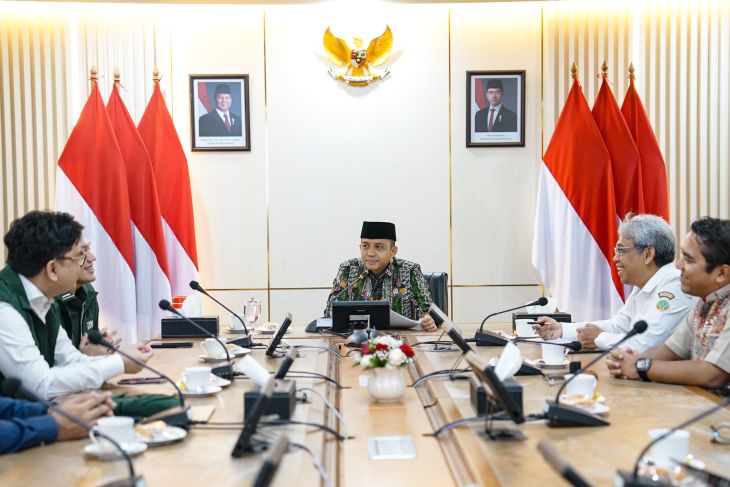
Photo caption: Forestry Minister Raja Juli Antoni holds a meeting with the Indonesia Carbon and Biodiversity Alliance (ICBA) at the Ministry of Forestry office in Jakarta on Tuesday (August 4, 2026).
Jakarta (ANTARA) - Forestry Minister Raja Juli Antoni affirmed the government's commitment to continuously improving Indonesia's national carbon trading ecosystem.
"I am committed to continuously improving our carbon trading ecosystem. We understand that its potential is enormous, but its development has stalled because of differing perspectives, causing such great potential to take too long to be realized," Antoni said.
He explained that the government has issued Presidential Regulation No. 110 of 2025 on Carbon Economic Value, followed by Ministerial Regulation No. 6 of 2026 as the implementing regulation for the forestry sector.
According to him, the policies have received recognition from international organizations, including the Integrity Council for the Voluntary Carbon Market (ICVCM), Verra, and the International Emissions Trading Association (IETA), all of which have played key roles in developing the global carbon market.
In addition to strengthening the regulatory framework, the Forestry Ministry has begun opening opportunities for carbon trading in conservation areas.
One pilot project is being developed at Way Kambas National Park alongside the establishment of the National Park Financing Innovation Task Force to promote more innovative conservation financing schemes through a blended finance approach.
Meanwhile, carbon industry players welcomed the ministry's efforts to improve Indonesia's carbon trading ecosystem.
Chairman of the Indonesia Carbon and Biodiversity Alliance (ICBA), Raffael Kardinal, said the ministry's policies have helped accelerate the development of several ongoing carbon projects.
"We have greatly benefited from the Ministry of Forestry's performance because we have several carbon projects currently underway," he said.
The ICBA outlined the progress of several carbon projects, beginning with a 73,000-hectare forest management project located in the buffer zone of Manusela National Park in Maluku, which is currently undergoing international validation.
Additionally, the alliance highlighted a 97,000-hectare carbon restoration project in North Halmahera, which applies a carbon removal methodology focused on reforesting previously logged areas.
