



KAUST Study: Climate Finance Could Unlock Investment in Seagrass Restoration
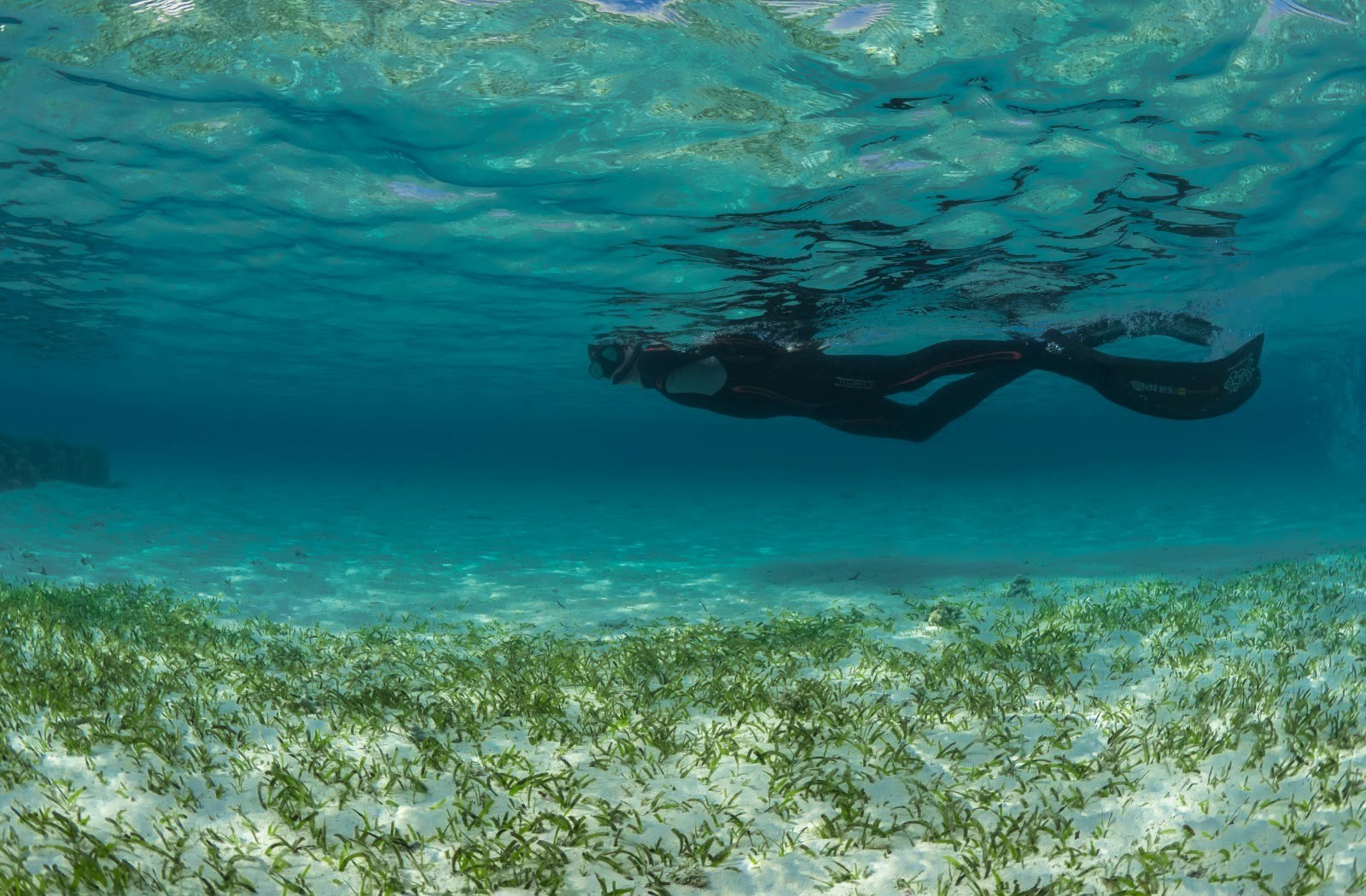
Jeddah, August 24, 2026, SPA -- A new international study co-led by researchers at King Abdullah University of Science and Technology (KAUST) has highlighted the significant economic and environmental potential of restoring seagrass meadows, estimating that carbon credits generated through restoration could reach a market value of $2.3 trillion under scenarios in which carbon credit prices rise.
Seagrass meadows are among the world's most effective natural systems for storing carbon, protecting coastlines, and supporting marine life. Yet despite their environmental importance, they receive only a small share of global climate finance.
Published in npj Ocean Sustainability, the research combines ecological and economic modeling to examine how carbon markets could support large-scale seagrass restoration. The researchers stressed that the estimated figure represents modeled scenarios rather than predictions and would depend on robust monitoring, transparent carbon accounting, and strong governance.
"Our understanding of the environmental value of seagrass has grown enormously over the past decade," said Professor of Marine Science at KAUST and co-author of the study Carlos Duarte. "The challenge has been demonstrating that value in ways that can attract long-term investment. Our research provides a framework for linking sound science with financial mechanisms that could help scale up restoration."
In the study, the researchers combined data on carbon storage and economic analysis to estimate the potential value of carbon credits generated through restoring seagrass ecosystems. Their findings suggest that, with the right scientific standards and financial systems in place, climate finance could become a much more significant driver of marine conservation.
For Saudi Arabia, the research provides timely evidence as the Kingdom continues investing in marine conservation and the sustainable development of its blue economy. Extensive seagrass meadows along the Red Sea coastline already support biodiversity, fisheries, and coastal resilience. The new framework offers a way to better understand how these environmental benefits could also help attract future investment in restoration and long-term stewardship.
The study also reflects KAUST's broader marine research across the Red Sea, where scientists are advancing understanding of coral reefs, mangroves, blue carbon, and ecosystem restoration. Together, these efforts are helping build the scientific evidence needed to support more informed conservation decisions and strengthen the resilience of one of the world's most unique marine environments.
The researchers emphasized that climate finance is not a substitute for conservation policy but an additional tool that could help accelerate restoration where strong environmental safeguards are in place.
-- SPA
