



Migratory Birds Enrich Northern Borders Region’s Natural Landscape
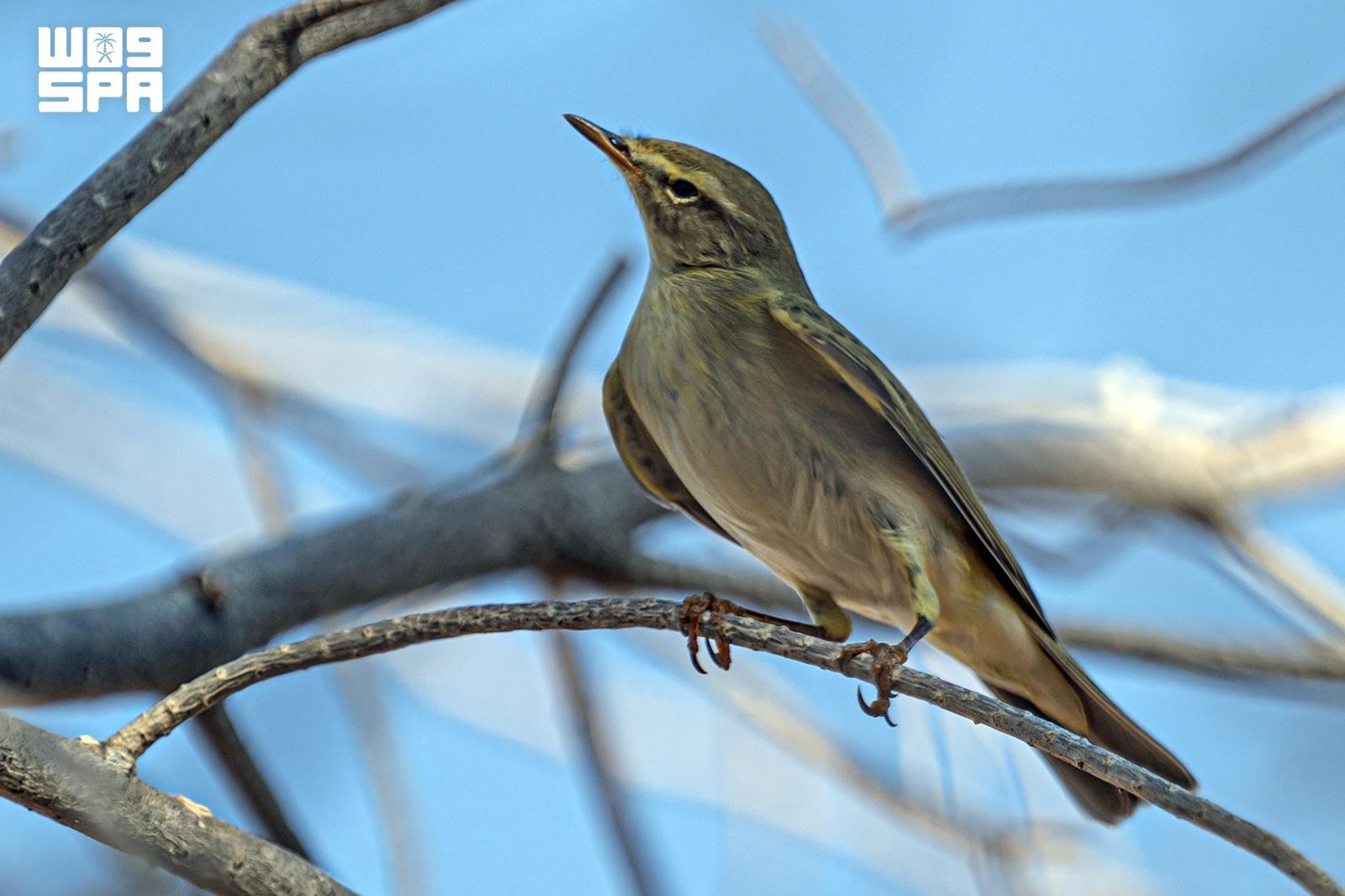
Arar, August 26, 2026, SPA -- Northern Borders Region witnesses notable diversity in migratory and resident bird species during migration seasons, benefiting from its geographical location and diverse natural habitats, which include plains, valleys, desert areas, trees, and shrubs. These features make the region one of the stopover sites where birds rest and feed before continuing their seasonal journeys.
Among the birds that can be observed during migration periods is the Willow warbler (Phylloscopus trochilus). This small migratory bird is characterized by its olive-brown plumage and pale eyebrow stripe. It feeds mainly on insects and moves swiftly among branches and trees in search of food. The species breeds across large areas of Europe extending to Siberia and spends the winter in sub-Saharan Africa.
The Great grey shrike (Lanius excubitor) is also prominent among the species recorded in the Kingdom of Saudi Arabia. It has a distinctive appearance combining gray, white, and black plumage, and is known for perching on elevated locations and branches to survey its surroundings before swooping down on prey. It ranges from 24 to 25 centimeters in length and feeds on small vertebrates and large arthropods. It is also known for impaling some of its prey on thorns or sharp branches for later consumption.
Another species enriching the birdlife of open and wooded habitats is the Upcher’s warbler (Hippolais languida). It is associated with trees and shrubs and occurs in dry and semi-arid environments, and is distributed across parts of western and central Asia and eastern Africa. It uses branches and shrubs as sites for movement and insect foraging.
Several species of flycatchers can also be observed. These small birds are distinguished by their characteristic hunting technique, in which they perch on branches and elevated locations to watch for prey before swiftly darting out to catch flying insects, then returning to a nearby perch to resume their watch. This behavior reflects their ability to adapt to their habitats and available food sources.
The presence of these and other species in the region highlights the importance of its natural habitats for resident and migratory birds, particularly during migration when they undertake seasonal movements between breeding and wintering grounds. The birds benefit from suitable sites where they can stop, feed, and replenish their energy before continuing their journeys.
-- SPA
