



(News Focus) Nvidia seeks broader AI partnerships in S. Korea as focus shifts beyond chips
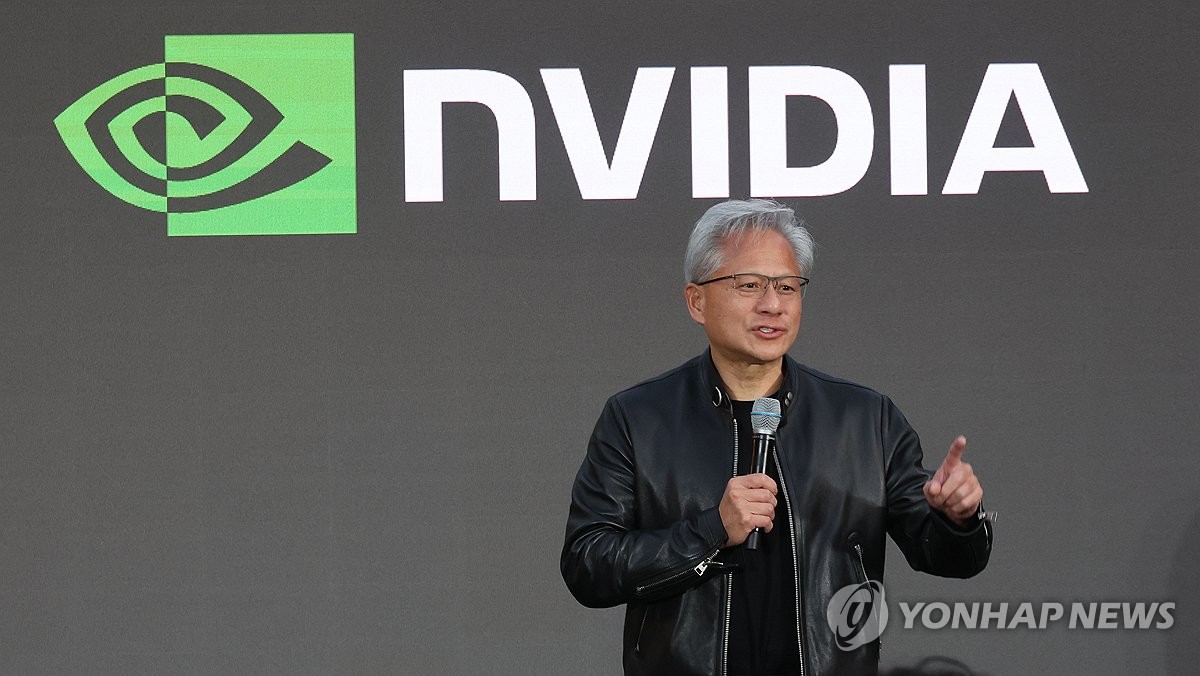
SEOUL, June 9 (Yonhap) -- Nvidia CEO Jensen Huang wrapped up his high-profile visit to South Korea with a clear message: the next phase of artificial intelligence (AI) will be built not only on advanced chips, but on an integrated ecosystem spanning everything from memory and data centers to robots and smart factories.
While previous visits focused largely on securing high-bandwidth memory (HBM) supplies from South Korean chipmakers, the latest tour showcased a much broader strategy centered on what Huang calls "AI factories" and "physical AI" -- the application of AI to robots, autonomous machines and industrial systems operating in the physical world.
The five-day visit produced a series of agreements with South Korea's largest tech companies and highlighted the country's growing role in Nvidia's long-term AI infrastructure road map.
"We are in the beginning of the AI revolution," Huang said Monday, noting that the long-term outlook for AI remains extremely promising in such areas as robotics and physical AI.
The clearest sign of Nvidia's evolving approach came from its engagements with South Korea's memory makers, which have benefited from the AI-driven semiconductor boom.
Samsung Electronics' memory chief Jun Young-hyun said Monday he held extensive discussions with Huang on long-term cooperation involving next-generation HBM technologies, including HBM4E and HBM5, as well as foundry collaboration.
A more significant announcement came from SK hynix, which signed a multiyear technology partnership with Nvidia to jointly develop next-generation memory technologies for AI factories and future AI systems, including Nvidia's Vera Rubin platform.
"Together, we are co-developing the next generation of memory for AI factories and applying AI to how we design and manufacture semiconductors -- work that will shape the future of AI infrastructure," SK Group Chairman Chey Tae-won said.
Another major theme of Huang's visit was physical AI, which Nvidia increasingly sees as the next growth engine beyond today's generative AI boom.
That vision was highlighted during Huang's meeting with Hyundai Motor Group Executive Chair Euisun Chung. The discussions focused on autonomous mobility, robotics and AI factories, areas Nvidia believes could drive the next wave of AI adoption.
Particularly notable was Chung's presentation of Hyundai Motor Group's 9 trillion-won (US$5.87 billion) Saemangeum project, which aims to build a large-scale cluster combining AI, robotics, hydrogen and data-center infrastructure on reclaimed land along the country's southwestern coast.
Huang referred to Hyundai's planned AI data center in Saemangeum as an "AI Valley" akin to California's Silicon Valley and said he was "very happy to build Nvidia in Saemangeum."
Another key partnership involved Naver, South Korea's leading internet company, which has been investing heavily in AI infrastructure and sovereign AI models.
Naver and Nvidia announced plans to expand Naver's Gak Sejong data center using Nvidia's AI infrastructure technologies, beginning with 55 megawatts of capacity and potentially scaling up to gigawatt-level facilities.
Doosan Group, which develops robotics technologies and supplies materials used in Nvidia's flagship Blackwell chips, said it expects its energy solutions to be adopted in Nvidia's data-center platforms while utilizing Nvidia's physical AI technologies.
Nvidia is also expanding cooperation with LG Group on electronics, mechanical systems and AI technologies for humanoid robots, Huang said after meeting LG Chairman Koo Kwang-mo.
The strategic significance of the visit extended beyond the private sector.
At the Korea AI Ecosystem Reception hosted by Nvidia, Science Minister Bae Kyung-hoon described cooperation with Nvidia as an opportunity to accelerate South Korea's ambitions to become a global AI leader.
Discussions between Huang and government officials also covered the delivery of 260,000 Nvidia AI chips announced during the Asia-Pacific Economic Cooperation (APEC) process last year.
Their meeting reflected a broader shift in South Korea's AI strategy -- from focusing primarily on hardware manufacturing toward deploying AI applications across industries ranging from manufacturing and mobility to robotics and digital services.
"By leveraging our world-class strengths in semiconductors and manufacturing, as well as our potential in AI, strategic cooperation with Nvidia would enable South Korea not only to exchange components and infrastructure, but also to create successful use cases across various industries," Bae said.
ejkim@yna.co.kr
(END)
