



Malaysia Strengthens Defense Posture With Asset Modernization, Enhanced Capabilities
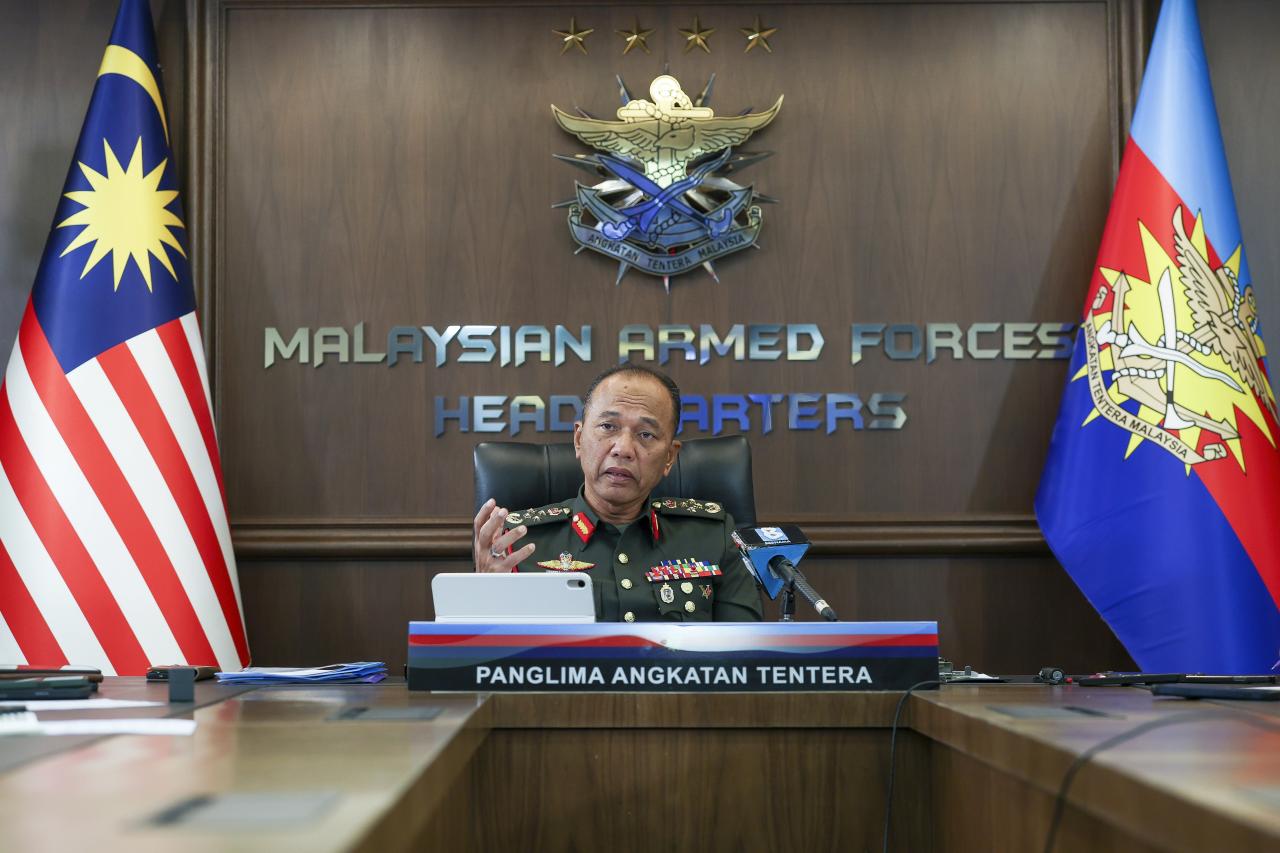
KUALA LUMPUR, Sept 17 (Bernama) -- The Malaysian Armed Forces (MAF) is continuing to strengthen the country's defense posture through the modernization of its assets and enhancement of the capabilities of its three services, particularly to address security challenges in the eastern region and the South China Sea.
Chief of Defense Forces Gen Malek Razak Sulaiman said the efforts included the acquisition of new assets, infrastructure development and the integration of land, maritime, air and cyber capabilities to ensure that the MAF remains ready to defend the country's sovereignty.
He said at the same time, patrols along land borders, territorial waters and airspace continued round the clock, including off the east coast of Sabah, which is now free from kidnapping threats.
“The area previously faced kidnapping threats, but such incidents have now been brought to an end due to the vigilance of our personnel, who safeguard security 24 hours a day, willing to sacrifice their time and stay away from their families,” he said in a special interview in conjunction with the 93rd MAF anniversary here.
For the Royal Malaysian Navy (RMN), Malek Razak said the Littoral Combat Ships (LCS) were expected to start being delivered in the middle of next year, alongside the construction of the Batch 2 Littoral Mission Ships (LMSB2) and acquisition of Fast Interceptor Craft (FIC).
He said the acquisition of Multi-Role Support Ships (MRSS) was also a priority to enhance the strategic mobility of personnel and assets between the peninsula and Sabah and Sarawak, while ensuring the continuity of RMN operations.
"In addition, a new RMN base will be built in Bintulu, Sarawak, specifically for the 4th Naval Area Command to enhance readiness in addressing overlapping claims and 'grey zone' threats in the South China Sea," he said.
For the Royal Malaysian Air Force (RMAF), Malek Razak said construction of a Forward Operating Base, or Bare Base, in Bintulu was 40.37 per cent physically complete and scheduled for completion on May 3, 2028, enabling aircraft to respond rapidly when required.
The MAF is also working with the National Security Council (NSC) to repair and upgrade infrastructure and the airstrip at Station Lima, Pulau Layang-Layang, he said.
He said air defense capabilities would also be developed in a more integrated manner through the acquisition of FA-50M fighter aircraft, the Medium Range Air Defense System (MERAD), Long Range Air Defense Radar GM400 Alpha and Airfield Surveillance Radar systems to address gaps in radar coverage along the border.
“The Anka unmanned aircraft system (UAS), which is currently based in Labuan for forward operational surveillance, is expected to achieve Initial Operating Capability (IOC) by October next year,” he said.
Meanwhile, for the Malaysian Army, Malek Razak said capability development was being pursued in a focused manner to enhance mobility, protection and firepower through the modernization of combat vehicles and motorized mortar systems.
Drawing lessons from conflicts around the world, he said the Malaysian Army was also placing greater emphasis on acquiring short-range air defense (SHORAD) and very short-range air defense (VSHORAD) systems to counter airborne threats, including drone and missile attacks.
On long-term planning, he said the MAF was also planning to develop an MAF Communications Satellite, which is expected to be fully operational by 2031, while cyber-domain capabilities were already being integrated into operations through Exercise Camar Kilat Series 2/26.
“The strategic focus for 2026 to 2030 is to ensure that every capability developed is integrated into operational concepts, so that government investment is translated into tangible operational effects in the field,” he said.
The MAF marked its 93rd anniversary yesterday under the theme 'Ketahanan ATM, Benteng Pertahanan Negara' (MAF Resilience, the Nation's Defense Bulwark).
-- BERNAMA
