



Indonesia eyes new EV incentives to boost local production
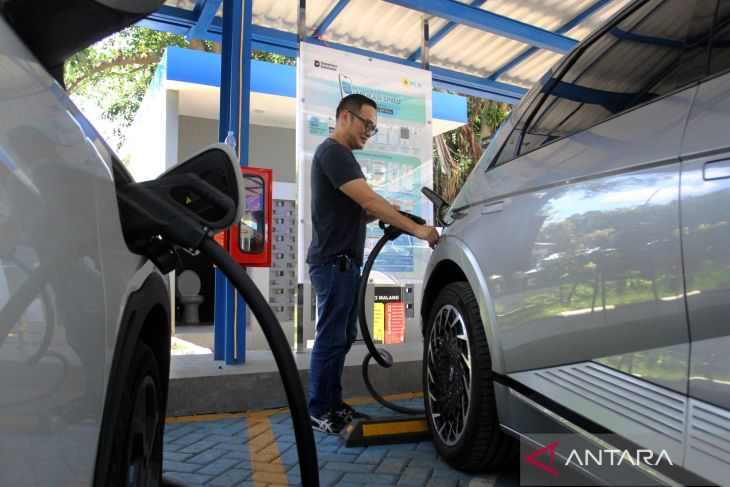
Photo caption: An electric vehicle owner charges his car at a Public Electric Vehicle Charging Station (SPKLU) located at the PLN UP3 office in Malang City, East Java, on Monday (April 13, 2026).
Jakarta (ANTARA) - The Indonesian government plans to align its electric vehicle (EV) incentive scheme with a broader national strategy to develop domestic car and motorcycle project.
Speaking in Jakarta on Monday (July 27), Coordinating Minister for Economic Affairs Airlangga Hartarto stated that ongoing government discussions are focusing on integrating consumer subsidies directly with national manufacturing goals.
"We will see whether this is linked to the national car or national motorcycle program," Airlangga said.
According to Airlangga, the government is currently evaluating the incentive structure to both boost consumer demand and strengthen the domestic EV supply chain. However, official details regarding the final format and implementation timeline have yet to be finalized.
The initiative supports broader targets previously outlined by Finance Minister Purbaya Yudhi Sadewa, who said the government aims to support annual sales of 100,000 electric cars and 100,000 electric motorcycles.
Under the proposed plan, the incentive for electric motorcycles is estimated at Rp5 million (approximately US$310) per unit, while the specific subsidy amount for electric cars remains under evaluation.
The policy push comes amid rapid growth in Indonesia’s green mobility sector.
Data from the Association of Indonesian Automotive Industries (Gaikindo) shows that battery electric vehicle (BEV) sales surged 95.9 percent year-on-year in the first quarter of 2026, reaching 33,150 units.
Meanwhile, two-wheelers continue to dominate Indonesia’s EV landscape. As of February 2026, the registered fleet of electric motorcycles reached 236,451 units, accounting for roughly 65 percent of all electric vehicles on Indonesian roads.
