



Indonesia has 3,687 GW renewable energy potential: Ministry
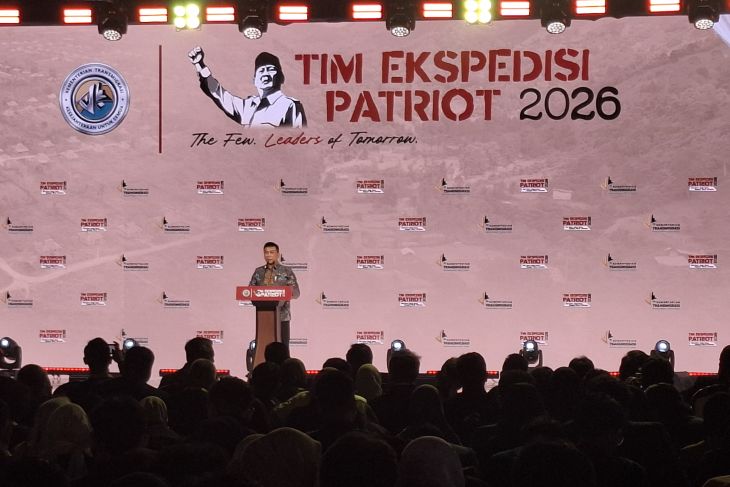
Photo caption: The Inspector General of the Ministry of Energy and Mineral Resources, Yudhiawan, during a briefing for the 2026 Patriot Expedition Team at Balai Kartini, Jakarta, Wednesday (July 29, 2026).
Jakarta (ANTARA) - The Ministry of Energy and Mineral Resources stated that Indonesia's renewable energy potential of 3,687 gigawatts (GW) offers vast opportunities to accelerate clean energy development, strengthen energy security, and support regional development.
"Indonesia has enormous renewable energy potential, reaching 3,687 GW, dominated by solar, hydropower, and wind energy," the ministry's Inspector General, Yudhiawan, said during a briefing for the Patriot 2026 Expedition Team on Wednesday.
Yudhiawan said that Indonesia's installed renewable energy generation capacity had reached approximately 16,321 megawatts (MW), or 16.32 GW, as of June 2026.
He noted that the wide gap between the country's renewable energy potential and its installed capacity underscores the need to accelerate clean energy development.
According to Yudhiawan, expanding renewable energy is expected to strengthen national energy security and independence while promoting transmigration areas as new centers of economic growth.
He added that the government is preparing to build power plants with a combined capacity of 69.5 GW, including 43.6 GW from renewable energy sources.
The plan is supported by the construction of a 47,758-kilometer transmission network and substations with a combined capacity of 107,950 megavolt-amperes (MVA).
Yudhiawan emphasized that expanding generation capacity and strengthening the transmission network are essential to improving the reliability of electricity supply, including in transmigration areas and the country's outermost, remote, and underdeveloped (3T) regions.
He said electricity grid expansion would serve villages located near existing distribution networks, while small-scale power systems or renewable energy-based mini-grids would be deployed in remote areas, islands, and scattered settlements.
He added that Papua has abundant renewable energy resources, including solar and micro-hydropower, which can provide sustainable electricity to hard-to-reach communities.
The government is also continuing the Village Electrification Program and the New Electricity Installation Assistance Program to expand electricity access for households that remain without power.
By 2025, the village electrification program had reached 1,516 locations and provided electricity to 77,616 households.
In addition to expanding renewable energy and electrification, Yudhiawan said the government's strategy for achieving energy sovereignty is built on three pillars: energy independence, energy security, and energy self-sufficiency.
The government also aims to increase national energy reserves from 18–21 days to at least 30 days by expanding the country's crude oil storage capacity.
Efforts to achieve energy self-sufficiency include increasing oil and natural gas lifting, accelerating electric vehicle adoption, expanding the use of natural gas as a substitute for LPG, and increasing the share of clean energy.
