



ASEAN Centrality, ZOPFAN Crucial To Maintain Peace In Indo-Pacific
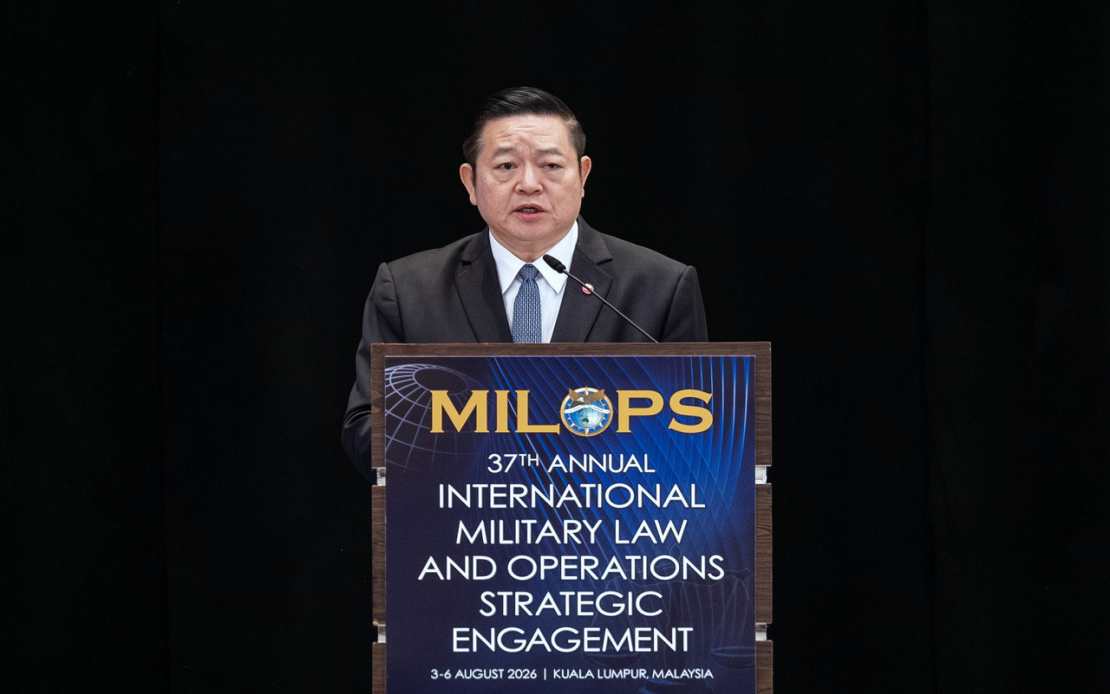
KUALA LUMPUR, Aug 3 (Bernama) – ASEAN centrality, strategic neutrality and adherence to international law remain crucial to maintaining peace and stability amid intensifying geopolitical competition in the Indo-Pacific, said ASEAN Secretary-General Dr Kao Kim Hourn.
He said ASEAN’s approach was not aimed at eliminating competition among major powers but ensuring that it was managed responsibly through dialogue, diplomacy, international law and practical cooperation.
“The more pressing task is to manage it responsibly, preventing it from undermining regional peace and stability,” he said in his address at the 37th International Military Law and Operations Conference (MILOPS 26) here on Monday.
Kao also echoed Malaysian Defence Minister Mohamed Khaled Nordin’s emphasis on the Zone of Peace, Freedom and Neutrality (ZOPFAN), describing it as an important principle for the region.
He said ASEAN’s unity, solidarity and ability to speak with one voice required stronger coordination within member states through a whole-of-government approach, as well as closer cooperation across the ASEAN Community.
Kao stressed that ASEAN centrality was neither about dominance nor excluding other powers, but reflected the grouping’s role as an honest broker, trusted convener and reliable platform for countries with different political systems and strategic interests.
The ASEAN Outlook on the Indo-Pacific, he said, advanced a regional vision based on dialogue, inclusivity, cooperation and shared responsibility rather than rivalry and exclusion.
“Countries should not be compelled or coerced to choose between competing strategic visions,” he said.
On maritime security, he reiterated ASEAN’s position that disputes should be resolved peacefully in accordance with international law, including the 1982 United Nations Convention on the Law of the Sea (UNCLOS).
ASEAN, he said, remained committed to the full and effective implementation of the Declaration on the Conduct of Parties in the South China Sea and the early conclusion of an effective and substantive Code of Conduct consistent with international law.
Professional conduct at sea, effective communication and confidence-building measures were necessary to prevent misunderstandings and unintended escalation, he added.
Kao also warned that artificial intelligence, autonomous systems, cyber capabilities and activities in outer space were developing faster than the rules governing their use.
He called for closer cooperation among governments, armed forces, legal experts, policymakers and academics to ensure technological advances remained guided by international law and responsible state conduct.
“The future of the Indo-Pacific will not be settled by the distribution of power. It will be shaped by the strength of our institutions, the resilience of our partnerships and our collective adherence to international law,” he said.
MILOPS 26, held in Kuala Lumpur from Aug 3 to 6, is hosted by the United States (US) Pacific Command in close cooperation with Malaysia’s Ministry of Defence and the Malaysian Armed Forces.
Themed “From the Seabed to Space: Advancing Security, Freedom, and Prosperity for All Across the Indo-Pacific”, the conference brings together more than 300 military leaders, national security lawyers, policymakers and scholars from over 30 countries, as well as representatives of international organisations.
The annual forum aims to promote dialogue and cooperation on legal, operational and policy issues while reinforcing the rule of law and sovereign equality of all nations.
-- BERNAMA
