



BRIN highlights Indonesia's potential in palm waste biogas
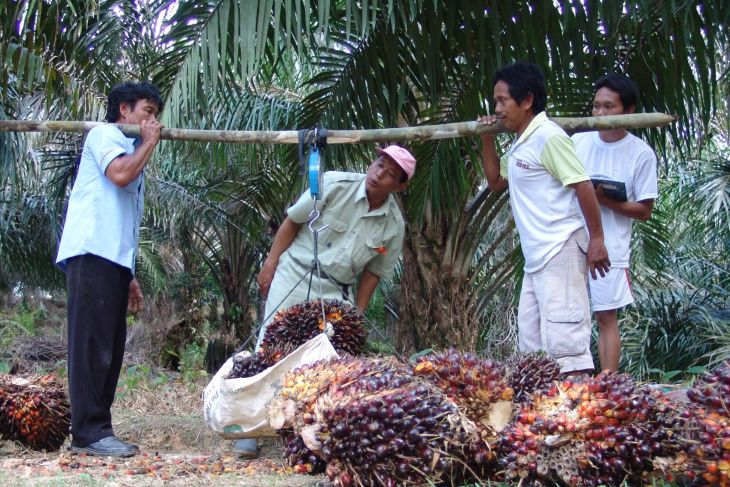
Photo caption: Illustration - A farmer weighs fresh palm oil fruit bunches (TBS) at a plantation.
Jakarta (ANTARA) - Indonesia holds strong potential to become a leading producer of biogas derived from palm oil waste, according to the National Research and Innovation Agency (BRIN).
"Indonesia has strong potential to develop biogas from palm oil mill effluent (POME). POME is a strategically valuable energy source that can be processed into electricity, heat, or fuel," BRIN researcher Erma Yulihastin said in a statement on Tuesday.
This potential is supported by Indonesia's 16.8 million hectares of palm oil plantations, which produce roughly 250 million tons of fresh fruit bunches annually.
Every ton of fresh fruit bunches generates around 0.5 tons of POME, giving Indonesia the capacity to produce approximately 125 million tons of liquid waste annually for biogas generation.
"POME contains high organic content and remains continuously available as long as palm oil mills operate," Yulihastin noted.
Developing palm waste-based biogas yields significant environmental, economic, and social benefits, she explained.
From an environmental standpoint, converting POME into biogas reduces methane emissions released from open waste treatment ponds.
Processing POME also lowers organic waste levels, minimizes odor, and mitigates water and soil contamination risks.
Yulihastin stressed that utilizing POME advances renewable energy targets while reducing emissions by replacing fossil fuels.
Research indicates that biogas facilities can cut emissions by approximately 1,131 tons of CO2 equivalent per month.
Economically and socially, POME utilization generates jobs in the construction, operation, and maintenance of biogas facilities.
Biogas also reduces operational energy costs for palm oil mills and can be refined into bio-compressed natural gas (bio-CNG) to fuel vehicles and local industries.
"Economic benefits will reach companies, local workers, and surrounding communities when management directly involves the region," Yulihastin said.
