



Traditional Water Basins Keep Heritage of Desert Life Alive in Northern Borders
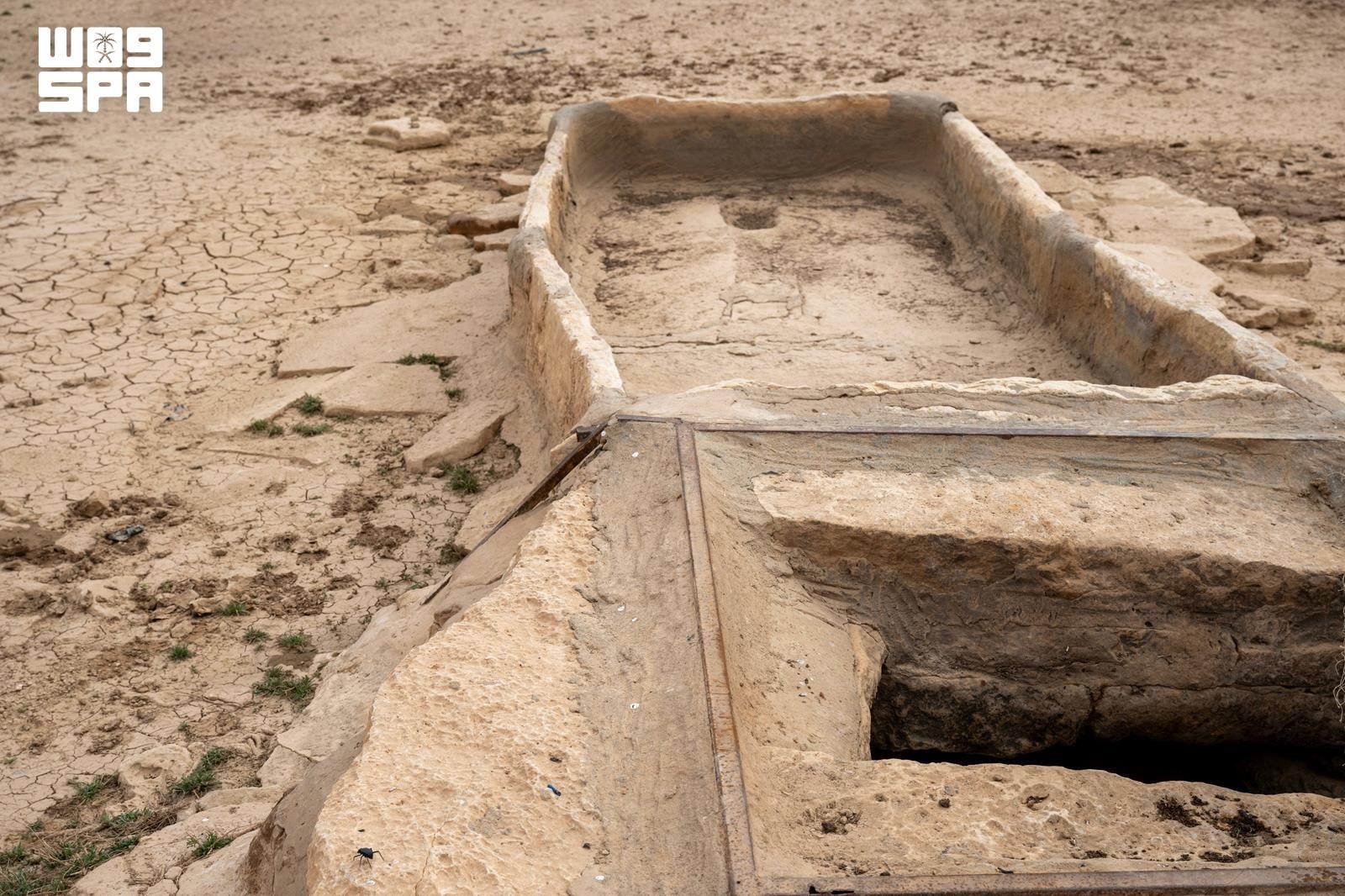
Rafha, September 8, 2026, SPA -- In Northern Borders Region, traces of the past remain woven into the desert landscape, offering glimpses into how people once lived alongside and carefully managed precious water resources.
Among these heritage features are the Qarw, traditional water basins associated with wells and other water sources that for decades helped organize the distribution of water for people and livestock.
Speaking to the Saudi Press Agency, tour guide and history and archaeology enthusiast Khalaf Al-Ghufaili explained that the Qarw was historically associated with water sources in desert environments. Built near the mouth of a well, it received water drawn up by bucket and held it temporarily before it was used, particularly for watering livestock.
The basins varied in size and shape according to need and the amount of water drawn from the well, he noted. In some cases, more than one basin was built around a single well, regulating access to water and easing congestion around the well opening, while also protecting the water source from damage or disruption.
The Qarw was traditionally built using methods suited to its surroundings. Some basins were carved into rocks near the water source, while others were constructed from stone and mud, reflecting desert inhabitants’ knowledge of how to make use of available materials, adapt to their environment, and conserve precious resources.
Today, these basins carry heritage significance as part of the landscape surrounding the region’s old wells. They offer clues to the history of settlement, movement and ways of life in northern Saudi Arabia, standing as quiet reminders of a time when water was at the heart of life in the desert.
-- SPA
