



Media Minister: Saudi Arabia Stands Strong Through National Unity, Puts People at Heart of Development
Riyadh, October 13, 2026, SPA -- Minister of Media Salman bin Yousef Al-Dossary affirmed that all Saudis stand ready to sacrifice their lives for the nation, its security, and its holy sites, and that they stand united behind the wise leadership, proud of the security personnel and the valiant armed forces.
He stressed that the Kingdom will remain strong through the unity of its people, resolute in protecting its security and safeguarding its resources, and steadfast in pursuing development and nation-building.
“We reaffirm our condemnation of the Houthi terrorist attacks that targeted civilians and civilian objects in the Kingdom, and extend our sincere condolences to the victims’ families,” Al-Dossary said. He prayed for mercy for the deceased and a swift recovery for the injured.
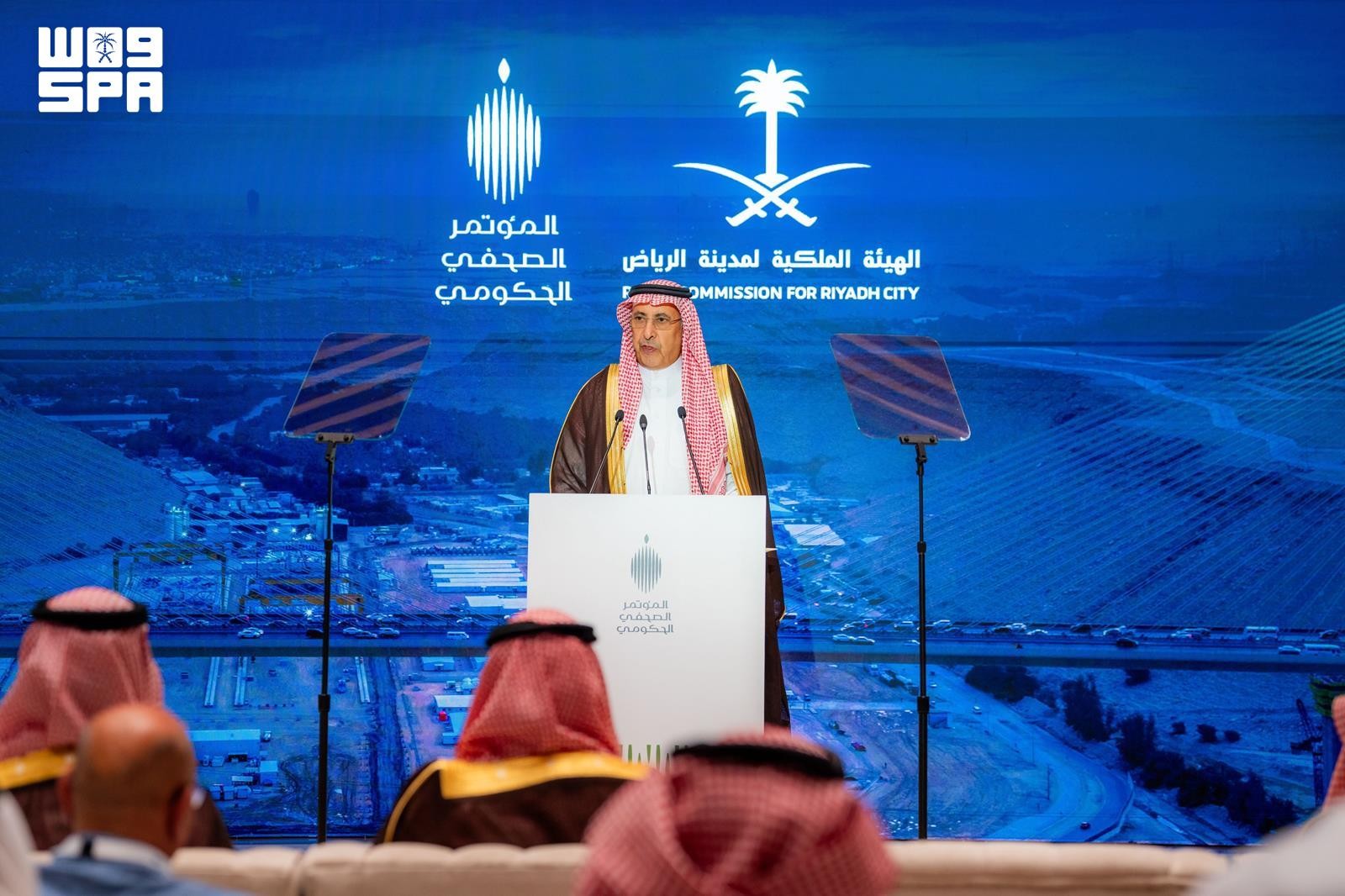
The minister made the remarks on Monday at the opening of the 37th government press conference, organized by the Ministry of Media in Riyadh, which reviewed the Kingdom’s latest developments and achievements. Minister of State, Member of the Cabinet, and CEO of the Royal Commission for Riyadh City (RCRC) Eng. Ibrahim bin Mohammed Al-Sultan also took part and highlighted the latest progress on the capital’s projects.
Al-Dossary emphasized that people are at the forefront of the Kingdom’s development priorities and are the ultimate goal of all development efforts. He said the royal address to the Shura Council embodied this approach by affirming that the core of government work is to advance the nation and improve people’s lives. His Royal Highness Prince Mohammed bin Salman bin Abdulaziz Al Saud, Crown Prince and Prime Minister, delivered the address on behalf of Custodian of the Two Holy Mosques King Salman bin Abdulaziz Al Saud.
He noted that the address clearly set out the priorities for the next phase. Foremost among them are further improving education and healthcare, investing in citizens’ capabilities and expanding their employment opportunities and competitiveness, and continuing real estate reforms that broaden housing options and make homeownership easier.
Al-Dossary said the leadership’s care extends to everyone living in the Kingdom, citizens and residents alike. In a fatherly gesture, the Custodian of the Two Holy Mosques directed that the status of all Yemeni nationals residing in the Kingdom irregularly be regularized, continuing the Kingdom’s fraternal stance toward the Yemeni people.
Reflecting the slogan “Leading by Example and Giving,” he said HRH the Crown Prince’s launch of the annual national blood donation campaign for 2026, which he opened with his own donation, embodied leadership by example and encouraged the community to take part in this humanitarian effort.
The leadership’s care for mosques, he added, was reflected in the Custodian of the Two Holy Mosques’ directive to name a new mosque in northern Riyadh after King Abdulaziz. The mosque will be built on a site covering 88,000 square meters, honoring the Kingdom’s founder and continuing the leadership’s commitment to building and caring for mosques.
Al-Dossary said the Cabinet’s approval of the National Strategy for Entrepreneurship and Small and Medium Enterprises supports citizens’ ambitions and ventures, promoting business growth and expanding opportunities for entrepreneurs and national enterprises. He added that the Cabinet’s approval of the new Government Tenders and Procurement Law strengthens fair competition, spending efficiency, and the quality of planning and implementation, while reinforcing transparency and equal opportunity among bidders.
The minister stressed that the Kingdom’s development decisions and initiatives share one goal: serving citizens and strengthening their families’ stability, with housing a key pillar of that stability.
More than 63,000 Saudi families became first-time homeowners in the first half of 2026, he noted. Meanwhile, the White Land and Vacant Property Fees Law continues to encourage the development of unused land, increase real estate supply, and improve land-use efficiency in cities.
Al-Dossary said stability extends to all aspects of family life, foremost among them job opportunities that give young men and women greater scope to build their futures and achieve their ambitions. The Human Resources Development Fund helped 329,000 Saudi men and women find jobs in the first half of the year, a 23% increase over the same period last year. He also noted that the decision to fully localize administrative support professions has taken effect. It covers 69 professions in human resources, administration, shipping, public relations, and other fields.
He added that skills development and expanding opportunities go hand in hand with continued improvements in government services, raising their efficiency and speeding up procedures. The Kingdom retained first place regionally for the fourth consecutive time in the digital government services maturity index, with an overall score of 99%.
“Development extends from digital services that save time and effort to transport and mobility services that connect cities to opportunities and markets to the world,” Al-Dossary said.
He noted that Saudi Arabia Railways signed an agreement to finance the purchase of 10 new passenger trains, expanding intercity services and raising passenger capacity. The Kingdom’s trains carried more than 38 million passengers in the second quarter of 2026, along with nearly 3.7 million tons of minerals and goods and more than 47,000 twenty-foot equivalent units (TEUs).
Development also extends to the energy, industry, and resources sectors as key pillars of economic growth and sustainability, he said. The Saudi Power Procurement Company signed four agreements for battery energy storage projects with investments of nearly SAR4.5 billion and a total capacity of 2,000 megawatts. The projects will enhance the power system’s reliability and efficiency and support the expansion of renewable energy.
He added that exploration at the Jabal Sayid project has identified estimated resources of about 114 million tons of ore with high concentrations of rare earth elements and promising indications of uranium, further bolstering the Kingdom’s critical and strategic mineral wealth.
He noted that projects to localize water industries have entered the industrial implementation phase, with investments totaling SAR2.8 billion. Local content in the sector has risen from 45% in 2020 to more than 68% in the first half of 2026.
Al-Dossary emphasized that the value of development lies in its direct impact on people’s lives, health, and the quality of care they receive. The Kingdom has consolidated its regional lead in the Healthy Cities Program, with 21 cities accredited by the World Health Organization after meeting 80 international standards. SEHA Virtual Hospital has also continued to bring specialized medical expertise and services to all regions of the Kingdom. It has performed 11 consecutive remote robotic surgeries, including one ranked as the second of its kind worldwide.
Highlighting the Kingdom’s international standing, the minister said a nation’s stature is measured by the international trust that makes it a destination for meetings and for dialogue on the world’s future. He noted that Riyadh continues to consolidate its position as a hub for a succession of international events, reflecting the Kingdom’s growing prominence on the global stage.
He said the Saudi presence spans culture, sports, and other fields, carrying the Kingdom’s heritage and its people’s ambitions to the world. This was evident at the International Saudi Falcons and Hunting Exhibition 2026 in Malham, north of Riyadh, which concluded after attracting more than 764,000 visitors over 10 days, with 1,446 exhibitors and brands from 47 countries.
He also noted the Kingdom’s celebration of the national team’s victory in the 27th Arabian Gulf Cup (Khaleeji 27) in Jeddah, its fourth title in a tournament that embodied the bonds of brotherhood among Gulf peoples. At the Asian Games in Japan, Saudi athletes achieved the Kingdom’s best-ever tally of 17 medals, including four golds, reflecting the rapid development of Saudi sports and the growing ambitions of national talent.
“Riyadh today is one of those cities whose transformation you can read as you travel its roads: in the flow of traffic, the spread of urban development, the succession of projects, and its growing stature as a capital of business, investment, and decision-making,” Al-Dossary said. “Whoever wants to witness a dream coming true before their eyes needs only look at Riyadh.”
He said these transformations are the fruit of long-term planning and integrated work among many entities, with the RCRC, led by Al-Sultan, spearheading a large share of them.
When asked about the repeated Houthi attacks of recent days, which targeted religious and civilian sites and vital facilities, and about the threat facing the Kingdom, Al-Dossary said: “First, we are dealing with a terrorist militia that has repeatedly shown it has no regard for international law or for moral and religious principles. Targeting the Two Holy Mosques, the holiest of sites, as well as civilians and civilian and vital facilities, confirms the nature of this conduct and makes vigilance and readiness a shared responsibility.”
“The terrorist conduct of the Houthi militia was evident in that it did not stop at targeting Makkah and Madinah, but extended its attacks to Umrah performers and visitors to the Two Holy Mosques,” he added. “The Kingdom’s airports are, as is well known, crowded with Umrah performers, pilgrims bound for the Grand Mosque, and visitors to the Prophet’s Mosque, and any attack on these airports necessarily endangers innocent people heading to Makkah and Madinah. Yesterday, in the genuine footage broadcast by the media, we saw the reality of this crime and its disregard for civilian lives and safety.”
The minister affirmed that the safety and security of citizens and residents are the Kingdom’s top priority. Military, security, health, and service agencies are coordinating to ensure an integrated response to any emergency, and the Kingdom has advanced capabilities to counter aerial, missile, and drone threats. He stressed that life in the Kingdom continues as normal and that raising readiness does not signal alarm. Rather, it reflects the state’s preparedness for all scenarios, however unlikely.
He underscored the public’s responsibility to obtain information from official sources and not to circulate images, videos, or information related to security and military operations from unknown or unreliable sources, affirming that accurate information is part of protecting security.
He said the Kingdom has the capabilities and readiness to defend its territory, protect its citizens, residents, and resources, and confront any threat, whatever its source.
All state agencies have raised their readiness and are operating under updated response and business continuity plans to ensure that essential services and vital facilities keep running, he said, adding that the competent authorities will deal with any threat firmly and efficiently to safeguard the Kingdom’s security and stability.
He affirmed that the terrorist Houthi militia’s continued escalation and targeting of religious and civilian sites and vital facilities will only make the Kingdom, its government and people alike, stronger, more resolute, and more united. He added that all Saudis stand behind the wise leadership in support of the measures it takes to confront the terrorist Houthi militia.
For his part, Al-Sultan affirmed that the capital is entering a new phase of comprehensive development under the leadership of HRH the Crown Prince, who chairs the RCRC Board of Directors. He highlighted the commission’s expanding role in urban and economic planning, directing growth and investment, developing infrastructure and services, and overseeing the implementation of major projects.
He said the program to develop Riyadh’s ring roads and main corridors aims to upgrade about 700 kilometers of key corridors and more than 330 major intersections. The program includes building more than 300 bridges and 80 tunnels to improve the efficiency of the road network and the flow of traffic.
He noted that the project linking Taif Road to Qiddiya is 81% complete, the Second Southern Ring Road 45% complete, and the two bridges parallel to the Suspension Bridge 42% complete. The main piers of the first bridge have been completed, and bridge installation has begun, while preparatory work on the second bridge and the interchange with the Western Ring Road is underway.
He highlighted ongoing work on the Al-Thumamah Road corridor, from King Khalid Road in the west to Sheikh Jaber Al-Ahmad Al-Sabah Road in the east, which includes upgrading 13 major intersections and building 10 tunnels and 17 bridges. Work is also continuing on the Takhassusi Road corridor and on several bridges and intersections linked to King Salman Road, strengthening connectivity between the capital’s districts.
He said the Al-Thumamah Road bridge at its intersection with Prince Mohammed bin Salman Road has been completed and opened to traffic. New sections of corridors, bridges, and tunnels will open in the coming period, including Taif Road in the Laban district leading to Qiddiya, several bridges around King Abdullah Financial District, and parts of the Al-Thumamah Road corridor.
On traffic management, the commission is carrying out engineering improvements at 26 critical locations, upgrading signal technology at 720 intersections and linking them to a unified control room. In its first phase, it has also begun work at 80 sites to manage vehicle flow on main roads.
Al-Sultan said Riyadh’s public transport network is approaching 500 million passengers since operations began, more than 300 million of them on Riyadh Metro. Trips by school and university students have exceeded 20 million.
An RCRC survey found that 83% of Riyadh Metro passengers use it daily, reflecting growing reliance on the metro for commuting to work and school and for economic activities.
He announced that the commission has signed contracts to purchase 94 new trains, expanding the Riyadh Metro fleet from 183 to 277. Daily capacity will rise from about 340,000 to about 533,000 passengers on the Blue Line, from 154,000 to 370,000 on the Red Line, and from 133,000 to more than 288,000 on the Yellow Line.
Work is underway to extend the Red Line from King Saud University to Diriyah with five new stations. Two of them will serve the university and its medical city, and three will be in Diriyah.
On the environment, the commission continues to implement the Riyadh Sustainability Strategy, which comprises more than 68 initiatives in air and water quality, protection of natural areas, afforestation, and waste management.
He noted progress on King Salman Park, which covers more than 17 million square meters in the heart of the capital. Large parts of the first-phase infrastructure have been completed, and afforestation and the development of facilities and public spaces are continuing.
Under the Green Riyadh Program, more than 4.5 million trees have been planted, and afforestation has extended along 235 kilometers of roads and corridors. Five million square meters of valleys and their tributaries have also been rehabilitated.
He said 14 major parks covering more than 12 million square meters are being developed. King Abdulaziz Park is 50% complete and Al-Urubah Park 55% complete, while the major parks in eastern Riyadh’s Al-Munsiyah, Al-Qadisiyah, and Al-Rimal districts are 85% complete. Work is also underway to complete more than 250 neighborhood parks, with more than 1,500 additional parks in preparation to bring green spaces closer to residents.
In valley and natural-area rehabilitation, Al-Sultan said the rehabilitation of Shuaib Ghadhwanah, covering 700,000 square meters, has been completed with about 40,000 native trees and shrubs planted. Work is progressing on the rehabilitation of Shuaib Umm Qasr, covering 1.3 million square meters, and on Dhahrat Namar Park, covering 2.5 million square meters and serving six major districts.
Afforestation has been completed in Shuaib Al-Haysiyah and the valleys within King Abdulaziz Military College, with a total of 1.7 million trees and shrubs. Work continues on a dedicated irrigation network that will extend more than 800 kilometers on completion, with capacity to carry about 1.7 million cubic meters of treated water a day.
The commission is working to protect and develop the natural areas surrounding Riyadh, covering about 10,400 square kilometers, and is applying measures to control dust from construction projects. It is also overseeing the installation of about 107 air-quality monitoring stations linked to these works. In addition, 17 stations monitor air quality and weather data around the clock, and 30 noise-pollution monitoring stations are being installed across the city.
On real estate market balance, Al-Sultan affirmed that HRH the Crown Prince’s directives on a package of measures to increase real estate supply, expand housing options for citizens, and stimulate real estate development and investment continue to be implemented.
The measures include providing citizens with 10,000 to 40,000 residential plots a year for five years, at no more than SAR1,500 per square meter. In the first year, more than 6.3 million square meters comprising 10,024 residential plots were allocated. Handover to the first batch of beneficiaries will begin alongside preparatory infrastructure work in five fully serviced residential developments.
The commission has completed the application and eligibility verification phase for the second year and is preparing to hold the electronic draw and allocate plots in mid-December.
A preliminary master plan has also been prepared for northeastern Riyadh, covering about 500 square kilometers, opening future opportunities for residential and investment development within integrated planning for services, infrastructure, and transport.
On Expo 2030 Riyadh, Al-Sultan announced that work has moved from planning to implementation. The detailed master plan has been completed, and countries have begun signing participation contracts, while construction of the site and its components and operational preparations are underway. The exhibition will feature more than 230 pavilions, with 197 countries and other organizations taking part, on a site of about six million square meters.
Al-Sultan affirmed that the projects underway form an integrated development system spanning planning, transport, the economy, housing, and the environment, keeping pace with the capital’s growth, meeting its residents’ needs, and preparing it for the future.
-- SPA
