



Bahrain chairs 12th meeting of GCC Supreme and Cassation Courts presidents
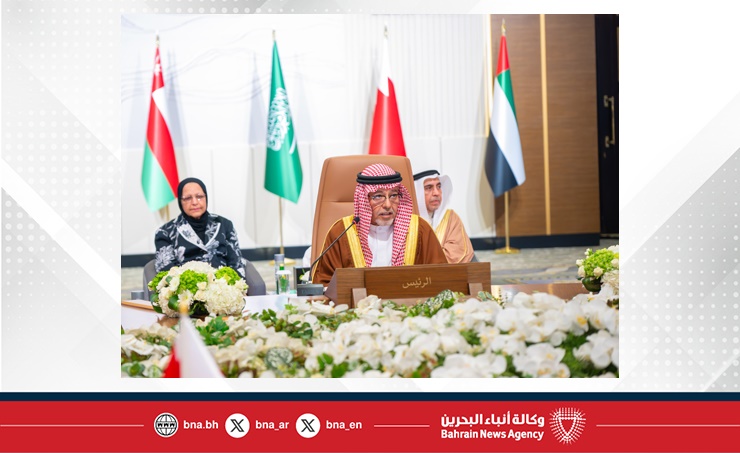
Manama, Oct. 13 (BNA): Shaikh Khalid bin Ali Al Khalifa, Deputy Chairman of the Supreme Judicial Council and President of the Court of Cassation, chaired the 12th meeting of presidents of supreme and cassation courts in the Gulf Cooperation Council (GCC) countries.
The meeting was held as part of Bahrain’s presidency of the 46th session of the GCC Supreme Council, with the participation of presidents of supreme and cassation courts from GCC member states and Shaikh Sultan bin Mohammed Al Thani, Assistant Secretary-General for Legislative and Legal Affairs at the GCC General Secretariat.
Shaikh Khalid bin Ali welcomed the participating court presidents and delegations, expressing his appreciation for the support extended by His Majesty King Hamad bin Isa Al Khalifa and His Royal Highness Prince Salman bin Hamad Al Khalifa, the Crown Prince and Prime Minister, to the judiciary, the continued advancement of justice and the rule of law, and efforts to strengthen cooperation and integration among GCC countries.
Shaikh Khalid bin Ali highlighted the importance of the meeting as a continuation of judicial cooperation among GCC states and a reflection of their shared commitment to developing judicial systems, exchanging judicial experiences, rulings and principles, and benefiting from emerging judicial practices to enhance the efficiency of judicial work.
Shaikh Khalid bin Ali also noted the similarities between the legal and judicial systems of GCC countries, stressing the importance of building on these commonalities to further harmonise judicial approaches and principles and expand cooperation and coordination among courts, while facilitating the exchange of expertise and accumulated experience.
Shaikh Khalid bin Ali underscored the importance of discussing the recommendations of the first GCC Judicial Conference, particularly those concerning the enforcement of family-related judicial rulings across GCC states and the use of artificial intelligence and modern technology to develop judicial work. He noted that these issues highlight the importance of exchanging experiences and expertise among GCC countries to keep pace with technological developments and advance judicial procedures.
The meeting reviewed several agenda items, including the electronic GCC Judicial Journal; a report on GCC judicial authorities’ efforts to combat money laundering crimes in 2025; a report on efforts to combat human trafficking crimes in 2026; and the selection of a topic for the 2027 annual report.
Participants also discussed a proposal by the GCC General Secretariat to establish a GCC award for research and studies in judicial fields, the recommendations of the first annual conference on judicial experiences and emerging judicial systems, and the annual report on judicial experiences presented through the interactive programme for personnel of supreme and cassation courts in GCC countries.
The meeting further addressed the exchange of notable and innovative rulings and judicial principles, as well as rulings based on laws and regulations issued by supreme and cassation courts across GCC states. The initiative aims to promote the sharing of judicial expertise and experience and broaden knowledge exchange among judicial authorities.
Participants also reviewed preparations for the second GCC conference, titled "The Future of Judicial, Justice and Legislative Cooperation among GCC Countries", the electronic platform for judicial rulings and principles across GCC states, and the GCC practical bilateral exchange visit programme for personnel of supreme and cassation courts and their technical offices.
Following the meeting, outstanding individuals were honoured under the GCC Award for Administrative Excellence in Supreme and Cassation Courts.
