



Saudi Arabia Maps Red Sea Depths to Support Sustainable Marine Economy
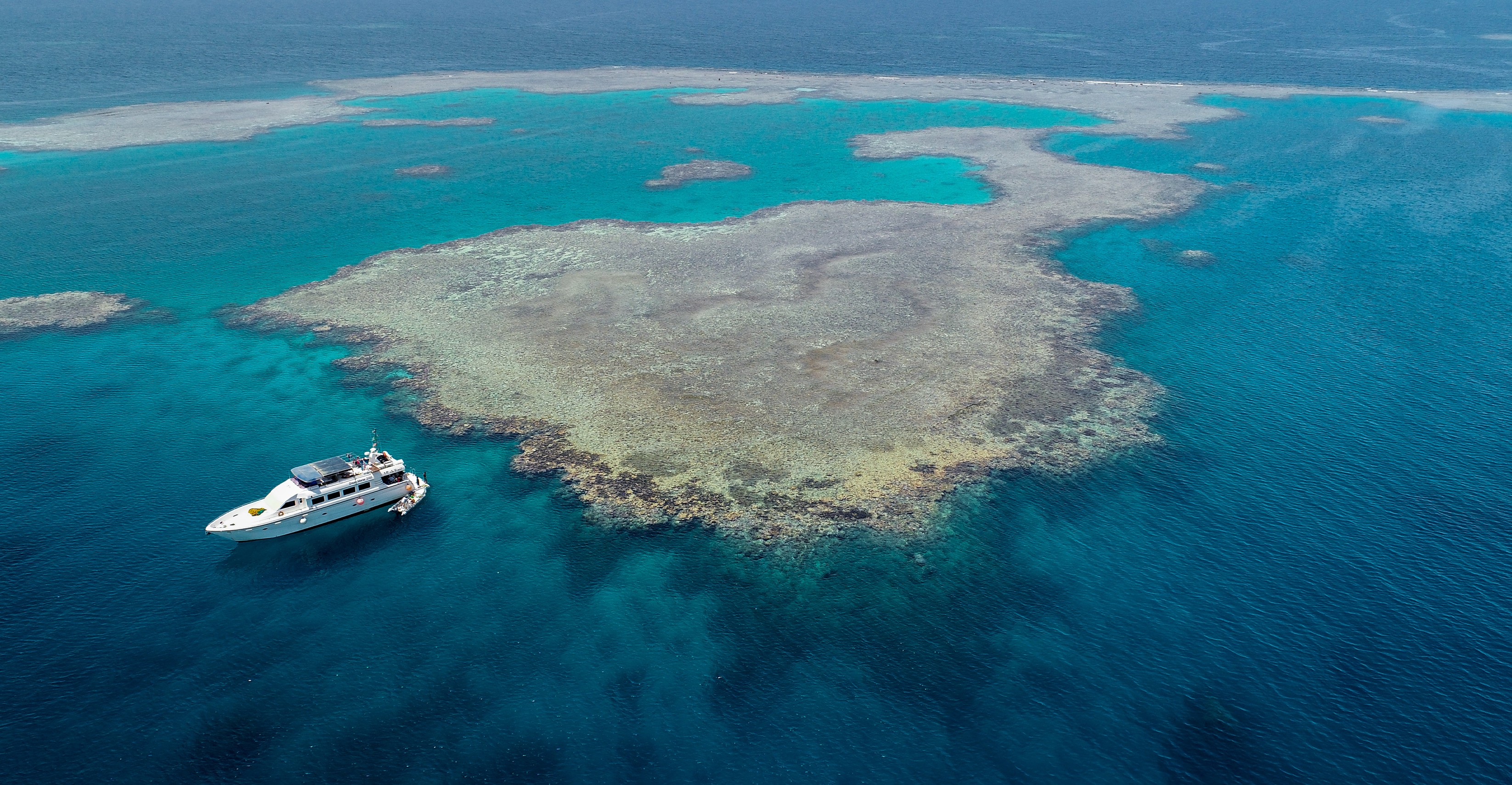
Riyadh, November 06, 2026, SPA -- Spanning around 186,000 square kilometers and home to thousands of islands, the Red Sea represents a vital strategic asset for the Kingdom of Saudi Arabia. To maximize its environmental, tourism, and economic value, the Kingdom is developing an integrated marine knowledge system that links high-level research with spatial planning and the blue economy. Recent investments have accelerated marine exploration, shifting the focus from descriptive observation to the targeted management and protection of ecosystems.
Scientific Research Expeditions: From Exploration to National Databases
A recent collaborative study by the National Center for Wildlife (NCW), King Abdullah University of Science and Technology (KAUST), and OceanX published high-resolution bathymetric data in Earth System Science Data. Drawing on data from the 2022 "Decade Expedition," the research mapped 860 kilometers of the Saudi coastline at depths ranging from two meters to over 2,460 meters, bridging critical mapping gaps and guiding marine resource management.
NCW has built on these initiatives by monitoring biodiversity across 64 coastal sites and deploying advanced sensors at 37 locations to track sea surface temperatures, providing baseline data for national environmental policies. Complementary research led by KAUST's Michael Berumen underscored the presence of undescribed endemic marine life, establishing scientific foundations for marine protected area networks. In 2026, KAUST demonstrated the effectiveness of environmental DNA (eDNA) for tracking species distribution in the northern Red Sea with minimal ecological disturbance.
Backed by more than 3,100 published studies from KAUST Red Sea Research Center, the "Decade Expedition" mapped 62,758 square kilometers of the seabed, collected over 2,800 biological and genetic samples, completed 44 deep-sea crewed dives, conducted 133 autonomous vehicle missions, and documented four previously unknown coral species across 19 weeks of fieldwork.
Geological and Biological Discoveries Bolster Conservation
NCW CEO Dr. Mohammed Qurban announced the identification of over 20 "blue holes" along the southern Red Sea coast—rare geological formations housing complex habitats of corals, sponges, turtles, and fish. Following targeted surveys of sites measuring 47 to 51.5 meters deep, the Cabinet formally declared the Blue Holes a national marine reserve in 2025.
Parallel efforts by the General Organization for Conservation of Coral Reefs and Turtles in the Red Sea (SHAMS) encompass a five-year program targeting 1,000 coastal sites, with 344 completed by late October 2026. SHAMS documented 251 coral species—including 25 endemic and 54 threatened species—alongside 358 reef fish varieties, while conducting 321 coral bleaching surveys, assessing 72 sites for environmental carrying capacity, and recording 46 giant colonies exceeding five meters in diameter. Its nursery supports 380 colonies across 13 genera, with 192 ready for reef restoration.
In sea turtle conservation, SHAMS verified 638 nesting sites in 2025 across 23 key ecological zones that represent 70% of nesting activity in Saudi waters. To support rehabilitation, SHAMS launched the Middle East's first specialized sea turtle care facility in 2024.
From a Blue Economy to a Marine Knowledge Economy
Marine data serves as a key pillar for economic diversification under Saudi Vision 2030, enhancing aquaculture, sustainable fisheries, coastal development, and pharmaceuticals. Collaborative programs between NCW and KAUST include initiatives to propagate and reintroduce endangered freshwater fish, tracking the mass migration of the endemic "Asir Garra," and monitoring recurring sightings of Bryde's whales in the Farasan Islands Protected Area.
Technological adoption is expanding through platforms such as "ReefNetAI," which deploys artificial intelligence to analyze coral imagery and automate species identification, alongside marine robotics, remote sensing, and autonomous submersibles. Public-facing conservation efforts are highlighted by Red Sea Global's "Corallium" marine life institute at the AMAALA Destination in Tabuk, designed to advance research while engaging the public in marine stewardship.
The Red Sea: A Global Laboratory for Climate Change
The Red Sea represents the world's fourth-largest coral reef system, containing approximately 6.2% of global reefs and more than 310 coral varieties, including 270 hard species. Their pronounced tolerance to elevated sea temperatures makes them a globally significant model for climate resilience research.
Conservation importance is further evidenced by sightings of critically endangered species, including the leatherback sea turtle recorded within the Blue Holes reserve. SHAMS continues its international engagements, partnering with the International Union for Conservation of Nature (IUCN), contributing to global reef assessments, and coordinating with NEOM, King Abdulaziz University, and KAUST.
Marine Knowledge Maps: A Tool for Decision-Making
Marine surveys are directly informing spatial planning by delineating sensitive habitats, conservation boundaries, and prime zones for tourism and commercial ventures. Dr. Qurban noted that these empirical datasets align with the National Red Sea Sustainability Strategy, which targets expanding protected marine zones from 3% to 30% by 2030.
Immediate operational priorities focus on finalizing the national coral baseline, broadening long-term pressure monitoring, mapping optimal restoration zones, and updating nesting protection frameworks—anchoring the Red Sea as an international hub for marine innovation and blue economy growth.
-- SPA
